
IBOGA PLANT FORUM, connects botanical, traditional, and contemporary knowledge of Iboga with research and professional inquiries.
Research & Professional Inquiries
Cameroon-Based Research & Professional Inquiries
People Behind the Knowledge
Meet a local point of contact for inquiries in Cameroon.
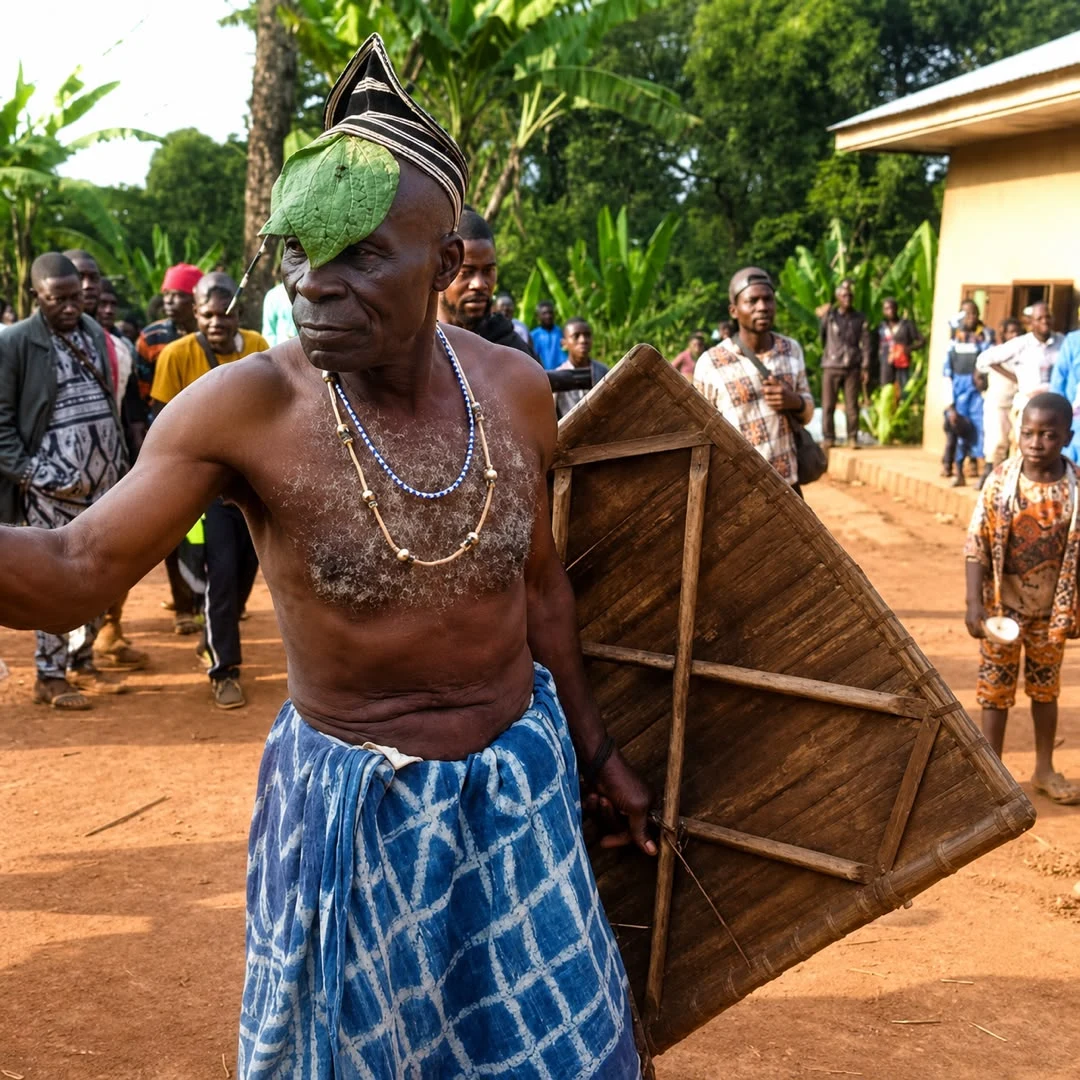
Traditional Medicine Practitioner / Iboga Researcher / Cultural Practitioner
Background / Experience
Based in Douala, Cameroon, MANJONG is a traditional medicine practitioner with experience in Iboga, traditional plant practices, and the cultural knowledge surrounding them. His work also connects with the wider cultural landscape of Cameroon through Manjong Collections, where he is involved in the trade of Cameroonian cultural artefacts and traditional jewellery. He also maintains connections with Iboga farming activities and people working with the plant in Cameroon.
Assist
He can be approached for questions relating to traditional Iboga practice, Cameroon-based plant knowledge, cultural and ethnobotanical subjects, and practical questions concerning Iboga in Cameroon. He may also assist people seeking knowledgeable local guidance when exploring traditional environments or retreat-related inquiries in the region, including connections concerning Gabon. Professional, research, and other serious inquiries can also be directed through the contact details provided below.
Iboga: A Plant at the Intersection of Knowledge
Iboga (Tabernanthe iboga) is a shrub of the Apocynaceae family native to Central Africa, including Cameroon, Gabon, the Republic of the Congo, the Democratic Republic of the Congo, the Central African Republic and Angola. It grows mainly in wet tropical environments and is known for its roots, leaves, flowers and distinctive fruits.
At IBOGA PLANT FORUM, we look at Iboga from several connected perspectives: botany, traditional and ethnobotanical knowledge, practical experience, and contemporary scientific research. These perspectives describe different aspects of the same plant and help place modern interest in Iboga within its wider context.
Botanical Knowledge
Botanical knowledge begins with the plant itself. It includes its taxonomy, morphology, geographic distribution, habitat, growth, propagation and relationship with its environment.
Tabernanthe iboga is an accepted species within the genus Tabernanthe. Understanding Iboga therefore means first understanding it as a living plant, rather than viewing it only through the compounds that have made it prominent in modern research.
Traditional & Ethnobotanical Knowledge
Iboga has a long history within Central African traditional practices. Its roots and root bark have particular importance in Bwiti traditions, where the plant is used in initiation and other ceremonial contexts. Traditional uses and preparations have also included medicinal and stimulant applications, with different practices involving different parts of the plant.
These traditions are culturally and geographically diverse. They cannot be fully explained through pharmacology alone. Human knowledge of Iboga also predates modern scientific interest in ibogaine, making the relationship between the plant and the communities that have worked with it an important part of understanding Iboga itself.
Practical Experience
Knowledge of Iboga also develops through direct interaction with the plant. This includes cultivation, propagation, field identification, harvesting, preparation, storage and long-term observation.
Iboga is cultivated in home gardens in parts of Africa, while wild harvesting has traditionally supplied much of the demand. How the plant is harvested can have important consequences: removing only part of the root can allow a cultivated plant to remain alive, while uprooting entire wild plants can damage natural populations. Cultivation and improved propagation have therefore become important areas of interest.
Practical experience has its own value, but it should be distinguished from experimentally established scientific evidence. It represents knowledge developed through repeated observation and direct interaction with the plant and its cultural environment.
Contemporary Scientific Research
Modern scientific research has focused heavily on ibogaine, one of the best-known alkaloids produced by T. iboga. The chemistry of the plant, however, extends well beyond ibogaine.
A plant-metabolomics study detected 30 alkaloids in Iboga root bark, illustrating the chemical complexity of the plant. Research has also examined other iboga alkaloids, including ibogamine, voacangine and coronaridine.
Contemporary Iboga research therefore extends across several fields, including phytochemistry, metabolomics, pharmacology, toxicology, neuroscience and natural-product chemistry. Iboga alkaloids are also being investigated as starting points for the development of new compounds and for therapeutic research.
Beyond Ibogaine
Iboga cannot be understood through ibogaine alone.
The plant can be studied as a botanical species, a part of Central African cultural traditions, a source of traditional and practical knowledge, a complex natural chemical system, and a subject of contemporary scientific investigation.
These perspectives do not have to replace one another. They describe different dimensions of the same subject.
At IBOGA PLANT FORUM, the plant itself remains at the center.
Cameroon-Based Inquiries
For inquiries requiring local knowledge or connections in Cameroon, IBOGA PLANT FORUM provides a point of contact through the forum.
This may include questions concerning traditional Iboga practices, botanical and plant knowledge, cultural practices, retreat-related inquiries, and professional or research interests connected with Cameroon.
Where appropriate, inquiries can be directed to knowledgeable contacts in the region rather than handled solely through the website.
Research Background
IBOGA PLANT FORUM brings together traditional knowledge, botanical interest, practical experience, and contemporary research to encourage a broader understanding of Iboga.
The research presented here is intended to provide context, encourage informed inquiry, and keep the plant itself at the center of the discussion.
Continue Exploring
For a more detailed introduction to Iboga, explore the dedicated Iboga page. Explore Iboga
Join the Community
For community perspectives, discussions, and shared experiences, visit the IBOGA PLANT FORUM community. Explore the Community
Educational Disclaimer
The information provided by IBOGA PLANT FORUM is for educational and informational purposes. It is not a substitute for qualified medical, legal, or professional advice.